No products in the cart.
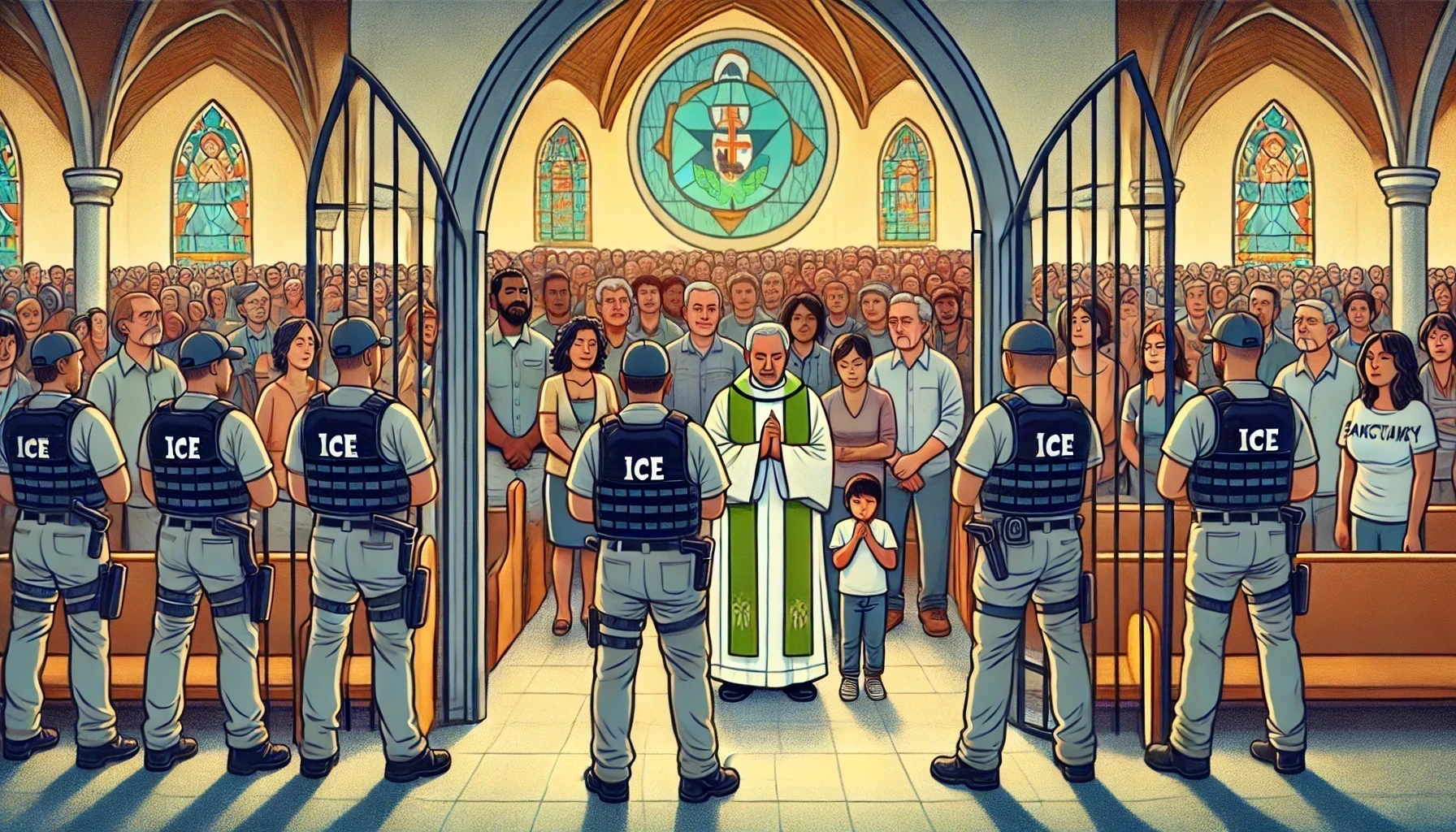
If ICE arrives at your church, knowing your rights as a sanctuary congregation can make all the difference — for your community, and for the vulnerable people in your care. For many progressive churches, providing sanctuary to immigrants is both a moral and theological imperative. If Immigration and Customs Enforcement (ICE) agents arrive seeking to detain someone for deportation, it's crucial to know your rights and responsibilities to protect immigrants while preserving your sacred space. Here's what every sanctuary church needs to know.
Churches, like other places of worship, are generally considered "sensitive locations" under ICE's 2011 policy memorandum. This means that, barring exceptional circumstances, ICE agents are supposed to avoid conducting enforcement actions in these spaces. However, this policy is not legally binding, and the current administration has stated its intention not to follow it. Ensure your church leadership understands:
Preparation is key. Conduct training sessions for clergy, staff, and volunteers on how to respond if ICE arrives at your church. These trainings should cover:
Many immigrant advocacy organizations offer training on how to be an effective sanctuary congregation. Connect with groups such as the American Civil Liberties Union (ACLU), National Sanctuary Collective, or local immigration advocacy networks.
Designate a team within your church to be responsible for handling immigration enforcement situations. This team should:
If an undocumented person is present at your church, do not physically obstruct ICE agents, as this could lead to criminal charges. Instead:
Being a sanctuary church means more than responding in the moment — it requires an ongoing commitment to immigrant justice. Your church can:
The call to protect the vulnerable is deeply embedded in Christian teachings. By knowing your rights, preparing your congregation, and standing in solidarity with immigrants, your church can be a place of true refuge. In a time of uncertainty for many immigrant communities, faith-based solidarity is more important than ever.
If your church is not yet part of the sanctuary movement, consider joining efforts with local interfaith coalitions to create safer spaces for all. Together, we can ensure that houses of worship remain places of peace, safety, and justice.
ICE agents are generally expected to avoid enforcement actions at churches and other places of worship under a longstanding sensitive locations policy. However, this policy is not a law — it is an internal guideline that the current administration has indicated it may not follow. ICE can enter public areas of a church, but requires a judicial warrant signed by a judge to enter private or restricted spaces.
A judicial warrant is signed by a federal judge and gives law enforcement the legal authority to enter private property. An administrative warrant is issued internally by ICE or the Department of Homeland Security and does not carry the same legal authority — it does not require a judge's signature. Churches have the right to deny entry based on an administrative warrant alone.
A sanctuary church is a congregation that has formally committed to protecting undocumented immigrants from deportation — either by physically sheltering individuals on church property, or by publicly declaring solidarity with immigrant communities and pledging to limit cooperation with immigration enforcement. Sanctuary status is a theological and moral declaration as much as a practical one.
This is a legally complex area. While no church has been federally prosecuted solely for providing sanctuary, the legal landscape is shifting. Churches considering formal sanctuary status should consult with an immigration attorney and connect with organizations like the ACLU or the National Sanctuary Collective for up-to-date guidance.
Stay calm. Do not physically obstruct agents. Ask to see a judicial warrant. Request time to contact legal counsel. Designate one trained spokesperson to interact with ICE agents. Document everything with video if safe to do so, and notify your legal support contacts immediately.
Last updated: April 2026. Immigration enforcement policies change rapidly — consult current legal counsel for the most up-to-date guidance.
Written by the Progressive Church Media in consultation with publicly available resources from immigrant advocacy organizations including the ACLU and the National Sanctuary Collective.

✅ Inclusive ✅ Downloadable instantly ✅ Bilingual options ✅ Affirming