No products in the cart.
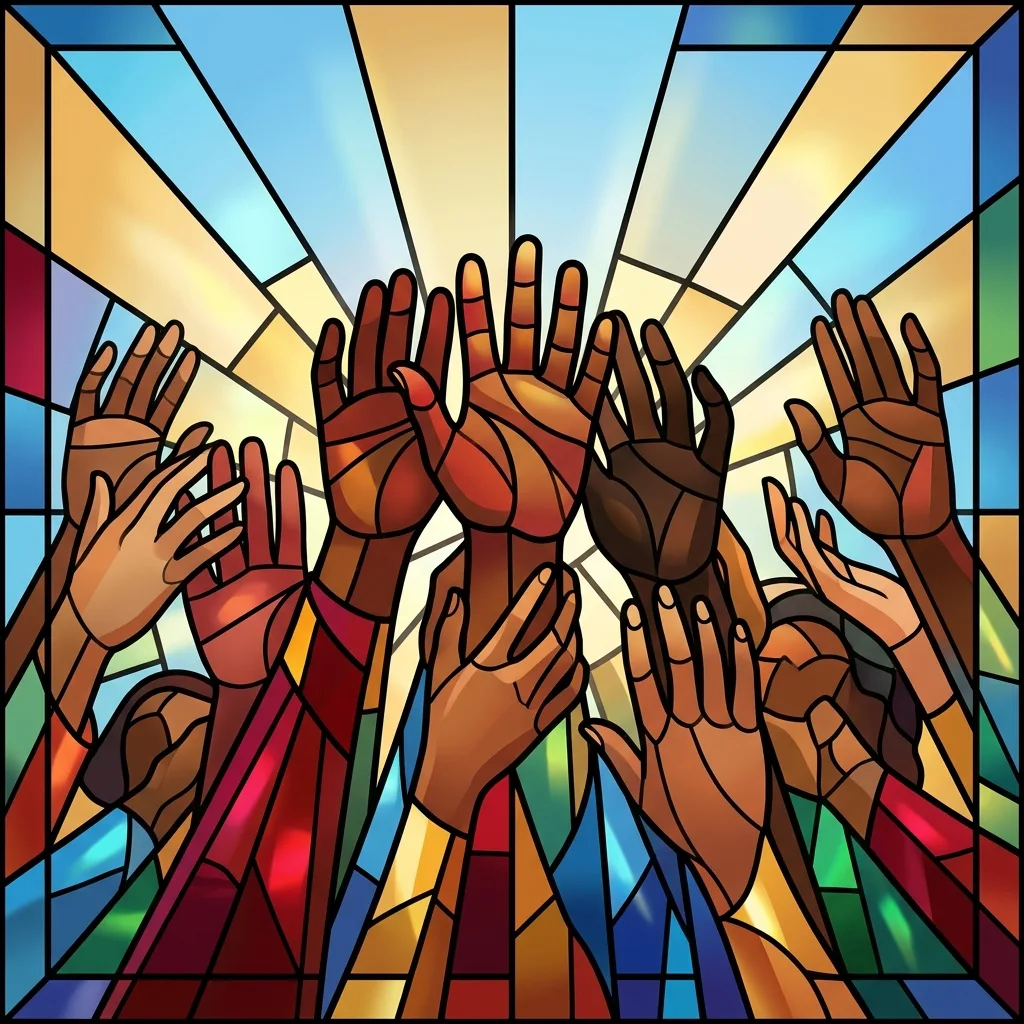
Juneteenth preaching is some of the most important work a pastor does all year — and some of the most easily mishandled. The history is weighty. The congregation's racial mix matters. The temptation to reach for comfortable spiritual metaphors is real. And the theological stakes are high: a Juneteenth sermon can either illuminate the ongoing reality of racialized injustice or quietly domesticate it into a feel-good story about freedom in Christ.
This guide is for progressive and mainline pastors who want to preach Juneteenth with theological honesty, pastoral courage, and genuine fidelity to the biblical text. If you're preaching in a predominantly white congregation, or doing this for the first time, there's specific guidance for you below. If you're a seasoned preacher looking to deepen your approach, the sermon frameworks in Section 2 are where to go.
There is a dominant sermon framework for Juneteenth, and it goes roughly like this: Just as enslaved people in Texas were freed on June 19, 1865, so too are we freed from our slavery to sin through Jesus Christ. It's a clean, spiritually resonant move. And it is, at best, incomplete — and at worst, a way of using Black history to illustrate a point about personal piety while leaving the actual history behind.
This framework has a name in homiletical circles: typological over-reach. The Exodus narrative, the Juneteenth moment, the lament of the enslaved — these become raw material for a sermon that is ultimately about something else. The real history disappears into illustration.
The problem isn't that personal transformation is unimportant. The problem is that Juneteenth is specifically about the failure of promised freedom to arrive — about the two-and-a-half years that passed between the Emancipation Proclamation and General Granger's announcement in Galveston, Texas. That gap is not a preaching illustration. It is the theological heart of the day. It names a recurring pattern in human history, and in American history in particular: freedom proclaimed on paper, withheld in practice.
A progressive Juneteenth sermon doesn't flee to the spiritual. It stays with the historical long enough to let it speak. It names the gap between promised freedom and delivered freedom as a structural, not merely a spiritual, problem. And it asks what that pattern requires of the congregation right now.
Each framework below includes a controlling idea, anchor texts, a homiletical approach, and a suggested closing move. These are starting points, not scripts — adapt them to your community, your preaching style, and where your congregation is in its Juneteenth journey.
Controlling idea: The gap between the Emancipation Proclamation and Juneteenth is not a historical footnote — it is a theological statement about the difference between freedom declared and freedom delivered. That gap continues.
Anchor texts:
Homiletical approach: Open with the historical facts of Juneteenth — the Emancipation Proclamation signed in January 1863, General Granger's announcement in Galveston in June 1865, and the two and a half years of continued enslavement in between. Then turn to Jeremiah 34, where the people of Jerusalem free their enslaved neighbors — and promptly re-enslave them when the Babylonian army withdraws. God's response through Jeremiah is unsparing. Name the pattern: freedom proclaimed, freedom withheld, freedom revoked. Then bring in Luke 4 not as resolution but as demand. Jesus has announced freedom. The question for the congregation is: are we the ones delaying its arrival?
Closing move: Invite the congregation to identify one specific way their community participates in the gap — not in general terms, but concretely. End with commitment, not just inspiration.
Controlling idea: The biblical Jubilee is not a celebration of spiritual freedom. It is a divinely commanded economic reset — land returned, debts cancelled, enslaved people freed. If we're going to claim Jubilee as a Juneteenth theme, we have to reckon with what Jubilee actually costs.
Anchor texts:
Homiletical approach: Most preachers use Leviticus 25 as a warm Juneteenth proof text and move on. This sermon stays in the text. Jubilee required the wealthy to give back land that had accumulated in their hands. It was not voluntary generosity — it was covenantal obligation. The sermon makes the case that Christian celebration of Juneteenth without any corresponding economic commitment is a kind of theological bad faith. Use Galatians 5:1 carefully: Paul's "freedom" is not freedom from the law's demands for justice, but freedom to fulfill them. The sermon should be direct without being accusatory — the frame is invitation, not guilt.
Closing move: Name a concrete Jubilee act your congregation could take — a reparations conversation, a partnership with a Black-led organization, a budget commitment. Give people something to walk toward.
See Also: What The Bible Says About Restitution →
Controlling idea: A Juneteenth service that rushes to celebration without lament is dishonest. The biblical tradition holds lament and praise together, and so must we.
Anchor texts:
Homiletical approach: This framework works particularly well in a liturgical structure — move through a genuine lament section before arriving at celebration, mirroring the Psalms' shape. The sermon itself might follow this arc: the truth of continued suffering (lament), the witness of those who endured (remembrance), and the reason for celebration that doesn't erase the grief (hope). Psalm 78 is essential here — it commands the community to tell the hard story to the next generation, not to sanitize it. Miriam's song shows that deep, authentic celebration is possible on the other side of lament — but not before it.
Closing move: Lead the congregation in a brief spoken lament — a moment of honest communal grief — before transitioning to a celebratory hymn. "Lift Every Voice and Sing" works powerfully as the transition point between lament and celebration. Its lyrics do both.
Controlling idea: Juneteenth is not only a day of historical remembrance. It is an annual reckoning with what the Church is actually doing about freedom in the present tense.
Anchor texts:
Homiletical approach: This is the most forward-facing of the four frameworks — the right choice when your congregation has already moved through historical grounding and lament in previous years, and is ready to ask what comes next. Open with an honest assessment of where freedom stands right now — not in 1865, but in your city, your neighborhood, your community's specific context. Use Micah 6:8 as the sermon's organizing question: what does the Lord require? Use Luke 13 to establish urgency — Jesus doesn't defer liberation to a more convenient moment. Close with Galatians 3:28, but preach it as demand, not comfort.
Closing move: Invite the congregation to name a specific commitment — as individuals and as a community. Build in time for this response. A Juneteenth sermon that ends without a next step has done half the work.
If you are a white pastor preaching Juneteenth, you are doing something important and something difficult. Here is practical guidance.
Ground it historically first. Before anything else, give your congregation two to three minutes of clear historical context — what Juneteenth is, what the two-and-a-half-year gap means, why it became a federal holiday. Don't assume your congregation knows. This is not remedial; it is pastoral.
De-center yourself without disappearing. You don't need to make the sermon about your own learning journey, but you also shouldn't pretend you're a neutral party. Acknowledge your position briefly, without dwelling on it, and then get on with the preaching.
Bring in other voices. If at all possible, include a Black guest preacher, poet, reader, or musician. If your congregation has Black members, ask with genuine care — not obligation — whether any would like to participate. The sermon doesn't have to be the only voice in the service.
Don't spiritualize away the history. The temptation for white pastors, often unconscious, is to reach for the universal spiritual application before the historical-structural work is done. Sit with the history longer than feels comfortable.
Don't make it about white guilt. Lament and guilt are different things. Lament is communal, honest grief about what happened and what continues. Guilt is self-focused and tends to produce paralysis. Preach toward lament, not guilt.
Follow the sermon with something concrete. A Juneteenth service that leads to nothing is a performance. Before Sunday, have a next step ready — a book recommendation, a community conversation, an organizational partnership, a budget commitment your leadership is willing to make. Give people a place to put their response.
A few passages come up frequently in Juneteenth preaching and are easy to misuse.
Galatians 3:28 — "There is no longer slave or free... for all of you are one in Christ Jesus."
This verse has a complicated history. It has been used to argue that because we're all spiritually equal before God, racial distinctions no longer matter — which functions as a way to avoid the actual work of racial justice. That is not what Paul means. Paul's radical claim is precisely that the social hierarchies of his world — including the slave/free distinction — are dismantled in Christ. That dismantling is not spiritual-only. It has social consequences. Preaching this text well means resisting the move to make it about individual souls and insisting on its communal, political force.
Romans 13 — "Let every person be subject to the governing authorities."
This text has no place in a Juneteenth sermon unless you're deconstructing its misuse. It was used to justify slavery. It was used to tell enslaved people to submit. Frederick Douglass knew this. Harriet Tubman knew this. If you engage it at all, engage it honestly.
John 8:36 — "If the Son makes you free, you will be free indeed."
Powerful verse. Easy to spiritualize into a freedom that has nothing to do with bodies, chains, or earthly bondage. Read in context — Jesus is speaking to people who claim Abraham as their ancestor while missing the liberation that ancestry implies. The freedom Jesus offers is not an escape from the material world; it is a claim on it.
The best Juneteenth sermons don't end with inspiration. They end with invitation.
There's a difference. Inspiration leaves the congregation feeling moved. Invitation gives them something to move toward. After a Juneteenth sermon — especially in a congregation that is newer to this kind of preaching — the pastoral task is to channel whatever has been stirred into a concrete, communal response.
A few structures that work:
A moment of spoken commitment. After the sermon, before the final hymn, invite the congregation into a brief spoken or written commitment. It can be as simple as: "Name one thing you will do differently because of what you've heard today." This doesn't have to be elaborate. It has to be real.
A congregational litany of response. If you've already built lament and celebration into the service, close with a call-and-response litany that moves from acknowledgment to commitment. The African American Lectionary has a published Juneteenth litany that can be adapted for this moment.
An announcement of next steps. Before the benediction, name what your congregation is doing next — not as a program plug, but as a pastoral declaration. "This week, we're opening a conversation about..." or "Beginning this month, we're partnering with..." The sermon becomes the beginning of something, not the end.
Need ideas for a full Juneteenth worship service? Click here →
Juneteenth Prayers and Liturgy ideas Click here →


What are good scripture passages for a Juneteenth sermon?
Strong Juneteenth sermon texts include Jeremiah 34:8–22 (the re-enslavement of freed people — one of the most directly relevant passages in Scripture), Luke 4:14–21 (Jesus proclaiming release to captives), Leviticus 25:10 (the Jubilee proclamation), Psalm 78:1–11 (the call to honest remembrance), and Galatians 3:28 (oneness in Christ, read as structural demand rather than spiritual comfort).
How should a white pastor preach Juneteenth?
White pastors preaching Juneteenth should ground the sermon in clear historical context, de-center themselves without disappearing, bring in Black voices where possible, resist spiritualizing the history into a personal-freedom metaphor, and close the sermon with a concrete next step for the congregation rather than inspiration alone.
What is the main theological theme of Juneteenth?
The central theological theme of Juneteenth is the gap between freedom proclaimed and freedom delivered — embodied in the two-and-a-half years between the Emancipation Proclamation and General Granger's announcement in Galveston, Texas. This connects directly to the biblical themes of Jubilee (Leviticus 25), liberation (Exodus, Luke 4), and lament (Psalm 78, Lamentations).
✅ Inclusive ✅ Downloadable instantly ✅ Bilingual options ✅ Affirming