No products in the cart.
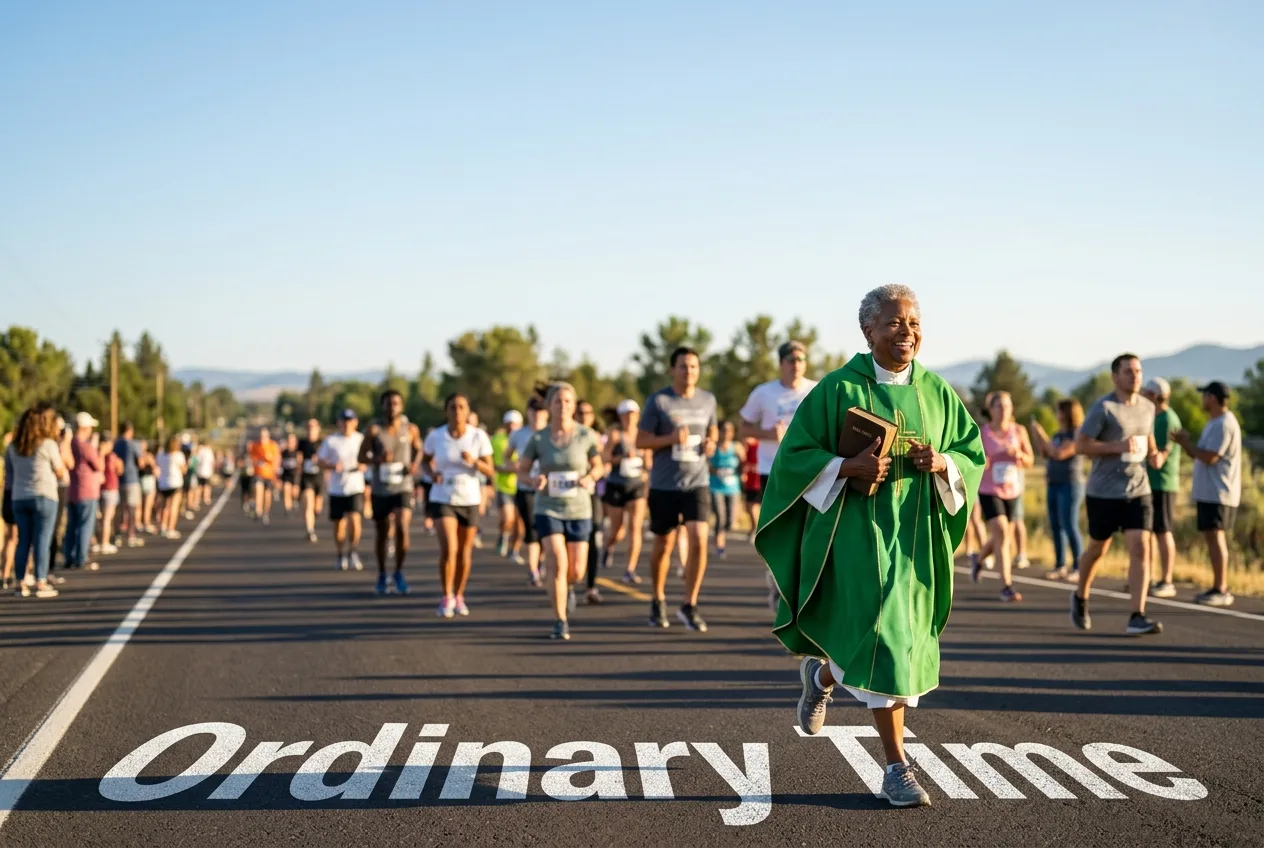
Ordinary Time is long. Wonderfully, generously, gloriously long.
From the Monday after Pentecost all the way to the Saturday before the First Sunday of Advent, your congregation has somewhere between 23 and 28 Sundays together — no major feasts pulling focus, no dramatic liturgical gear-shifts. Just the steady green of growing season, week after week.
That's not a problem to solve. That's an opportunity to seize.
For progressive faith communities, Ordinary Time is arguably the most important stretch of the church year — the season where values meet practice, where theology gets tested in everyday life, and where sustained, thematic preaching can actually change how people see the world and their place in it. (If you're new to Ordinary Time altogether, start with our guide: What Is Ordinary Time? A Progressive Christian Guide.)
What follows is a curated set of sermon series ideas designed specifically for progressive and inclusive congregations, each grounded in the Revised Common Lectionary (RCL) and shaped for communities that take seriously the call to justice, welcome, and belonging.

The Revised Common Lectionary is the shared scripture cycle used by most mainline progressive denominations — Episcopal, United Methodist, ELCA Lutheran, Presbyterian (PCUSA), UCC, Disciples of Christ, and others. It rotates through a three-year cycle (Year A: Matthew, Year B: Mark, Year C: Luke), and during Ordinary Time it offers rich, semi-continuous readings from the Synoptic Gospels alongside substantial Old Testament narratives.
This matters for sermon series planning because the RCL during Ordinary Time gives you sustained access to exactly the texts that speak most directly to a justice-centered faith: the parables of Jesus, the Sermon on the Mount, prophetic voices from Amos and Isaiah, the wisdom of the Psalms, and the early church's wrestling with what it means to live as a beloved community.
You don't have to fight the lectionary to preach progressively. During Ordinary Time, the lectionary is largely on your side.
Best for: Early Ordinary Time (after Pentecost), any RCL year Lectionary anchor: Semi-continuous Gospel readings, Year A (Sermon on the Mount, Matthew 5–7); Year B (Mark's healing stories); Year C (Parables of Luke)
One of the most powerful things a progressive congregation can do is spend extended time in the actual words and actions of Jesus — not abstracted into doctrinal propositions, but encountered in their full, disruptive, embodied particularity. Jesus blessed the poor in spirit. Jesus touched lepers. Jesus ate with tax collectors and sinners. Jesus told stories that upended every social assumption his listeners held.
A six-to-eight week series tracing one Gospel's portrait of Jesus through Ordinary Time can be genuinely transformative. Frame it as an invitation to know Jesus again — or perhaps for the first time — beyond the version many in your congregation encountered in more conservative faith contexts.
Suggested series title: "Jesus, Unfiltered" / "Who Do You Say I Am?" / "Following the Radical Jesus"
Best for: Summer Ordinary Time (June–August) Lectionary anchor: Healing and inclusion narratives; Romans 12 (Year A); Ephesians (Year B)
Dr. Martin Luther King Jr. borrowed the phrase "beloved community" from philosopher Josiah Royce, but filled it with something electric: a vision of a society grounded not in fear or dominance, but in love, dignity, and mutual care. For progressive congregations actively working through what it means to be genuinely inclusive — of LGBTQ+ people, people with disabilities, people of color, people experiencing poverty — this is rich theological territory.
Draw on texts that show Jesus crossing every boundary the religious establishment maintained: healing on the Sabbath, honoring the Samaritan, welcoming children, eating with the excluded. Pair these with contemporary voices from liberation and womanist theology. Give your congregation both the ancient roots and the living branches of a theology of radical welcome.
Suggested series title: "Beloved Community" / "All Means All" / "Wide as the World"
Best for: Season of Creation (September 1 – October 4), or summer Lectionary anchor: Creation texts (Genesis 1–2); Psalm 104; Romans 8:18-25
The ecumenical Season of Creation falls within Ordinary Time each year, running from September 1 (the World Day of Prayer for the Care of Creation) through October 4 (the Feast of St. Francis of Assisi). More and more mainline and progressive congregations are observing it, and for good reason — the theological case for creation care is not peripheral. It's woven through scripture from Genesis to Revelation.
A four-to-five week series here can move a congregation from vague environmental sympathy to a theologically grounded, action-oriented eco-faith — one that names climate change as a justice issue, honors Indigenous relationships with the land, and calls the church to specific, embodied response.
Suggested series title: "Tending the Garden" / "Holy Ground" / "Love Letter to the Earth"


Best for: Mid-to-late Ordinary Time (August–October) Lectionary anchor: Semi-continuous Old Testament readings (Amos, Hosea, Isaiah, Jeremiah appear throughout the three-year cycle)
The prophets are having a moment — and rightly so. Amos thundering against those who "sell the righteous for silver." Isaiah envisioning a feast for all peoples. Jeremiah weeping over a city that has forgotten its calling. These are not dusty ancient texts. They are blueprints for every justice movement your congregation cares about.
A series on the prophetic imagination does two things simultaneously: it roots contemporary justice work in scripture (important for congregations navigating diverse theological backgrounds), and it gives your people a larger, longer story to locate themselves within. We are not the first to resist. We will not be the last.
Suggested series title: "Prophetic Voices" / "Speak, O Lord" / "The Long Arc"
Best for: Late summer or fall Ordinary Time Lectionary anchor: Luke's wealth and poverty parables (Year C): the Rich Fool (Luke 12), the Rich Man and Lazarus (Luke 16), Zacchaeus (Luke 19)
Year C of the lectionary is sometimes called "the year of Luke" — and Luke's Jesus is relentlessly, uncomfortably focused on wealth, poverty, and the obligations of the comfortable toward the poor. If your congregation is ready to move beyond charity into structural analysis, this is your series.
Preach the parables honestly. Let the Rich Man and Lazarus sit in uncomfortable silence. Then connect that discomfort to real questions: living wages, housing access, congregational generosity, and what it looks like for a faith community to be genuinely proximate to those experiencing economic hardship.
Suggested series title: "Money and the Gospel" / "Upside Down Kingdom" / "Who Is My Neighbor?"
Best for: September–October, ahead of any election season Lectionary anchor: Romans 13; Mark 12:13-17 ("Render unto Caesar"); prophetic texts on justice and governance
This series requires pastoral courage — and a lot of nuance. The goal isn't to tell your congregation how to vote. The goal is to help them think theologically about what faithful participation in public life looks like: how to hold prophetic conviction and civic humility at the same time, how to resist both tribal politics and disengaged quietism, and how to ask "what does the Gospel require of us here?" before reaching for partisan defaults.
Done well, this series can be among the most valuable a progressive congregation offers — modeling exactly the kind of thoughtful, values-grounded civic engagement the world desperately needs.
Suggested series title: "Faithful Citizens" / "In the World" / "For the Life of the World"
Best for: Any stretch of Ordinary Time; particularly resonant in summer Lectionary anchor: Jesus's healing miracles; Psalms of lament; 2 Corinthians 12:9
Mental health is one of the most urgent pastoral conversations of our time — and one that the church has historically handled poorly, with theology sometimes weaponized to shame, stigmatize, or spiritually bypass real human suffering. A progressive congregation can do something different: hold the full complexity of mental and emotional health with theological seriousness, clinical respect, and genuine pastoral care.
This series works best when done in partnership with licensed mental health professionals in or adjacent to your community, and when it includes real stories (with permission) from within your congregation. The goal is to make your church a place where someone in crisis knows they will be met with compassion, not shame.
Suggested series title: "Healing and Wholeness" / "It's Okay Not to Be Okay" / "Beloved, Even This"
Best for: Summer Ordinary Time; good for mixed or newer congregations Lectionary anchor: Old Testament narrative cycles (Abraham and Sarah, Jacob, Joseph, Ruth, David — all appear in Ordinary Time lectionary readings)
The Ordinary Time lectionary is full of complex, morally ambiguous human stories — ancestors of faith who lied, betrayed, doubted, failed, and were nonetheless held by a God who refused to let go of them. These are not sanitized hero tales. They are honest accounts of what it looks like to be human and beloved at the same time.
A narrative series that takes these stories seriously — and invites the congregation to find their own stories within them — can be deeply pastoral for communities that include people navigating deconstruction, doubt, or transition from more rigid theological frameworks.
Suggested series title: "Story People" / "We Are the Stories We Tell" / "Held"
Best for: Late Ordinary Time (October–November), or as a Kingdomtide/Kindomtide series Lectionary anchor: Christ the King Sunday texts; parables of the reign of God; Matthew 25
As Ordinary Time draws toward its close, the lectionary themes turn naturally eschatological — toward questions of what we're all ultimately moving toward. For progressive congregations, this is a chance to preach the reign of God not as a distant afterlife concept, but as a present, embodied, relational reality being built here, now, in every act of justice, welcome, and repair.
Note the language opportunity here: many progressive congregations prefer kindom over kingdom — the term coined by liberation theologian Ada María Isasi-Díaz to emphasize kinship, community, and mutual belonging over hierarchy and power. A series that explicitly names and explores this reframing can be a meaningful theological gift to your congregation.
Suggested series title: "Kindom Come" / "Already and Not Yet" / "Building the Beloved World"
Best for: Any stretch of Ordinary Time; especially strong in summer when attendance is lighter Lectionary anchor: Sermon on the Mount (Year A); Jesus's prayer life (all years); Psalm texts on contemplation
"Practice makes perfect" is a lie — but "practice makes practice" is the truth. Spiritual formation isn't about achieving perfection. It's about returning, again and again, to the practices that keep us oriented toward God and neighbor: prayer, scripture, sabbath, community, generosity, silence, service.
For progressive congregations that may have complicated relationships with traditional spiritual disciplines (often associated with punitive or performance-based religion), this series is a chance to reclaim these practices with fresh language and a grace-filled frame. What does sabbath look like for people who are exhausted? What does prayer look like for people who aren't sure who they're talking to?
Suggested series title: "Practice Makes Practice" / "Show Up" / "The Ordinary Way"
How long should an Ordinary Time series run? Four to eight weeks tends to be the sweet spot for progressive congregations. Long enough to build genuine depth; short enough to maintain momentum. If you have 24+ Sundays of Ordinary Time, plan two or three series rather than one marathon stretch.
Do I have to follow the lectionary? No. The lectionary is a gift and a discipline, not a requirement. Many progressive congregations preach thematically and return to the lectionary as a conversation partner rather than a strict constraint. The series ideas above are all compatible with lectionary preaching, but none require it.
What about worship elements beyond the sermon? The best sermon series are ecosystems, not standalone homilies. Consider how your music, liturgy, visual environment, and congregational practice can reinforce and extend the series themes throughout the week. Inclusive worship media — images, videos, and visuals that reflect the diversity of your congregation and the themes you're exploring — can be a powerful tool for creating that ecosystem.
Can I use these ideas in a bilingual or multicultural context? Absolutely. Several of these series — particularly Beloved Community, Kindom Come, and Prophetic Voices — are especially well-suited to multicultural and bilingual congregations, and the theological frameworks they draw on (liberation theology, womanist theology, Indigenous perspectives) actively center voices from outside the dominant culture.
Twenty-three to twenty-eight Sundays is a lot of Sundays. It's also a remarkable pastoral opportunity: to form your congregation in justice, root them in scripture, stretch their imagination, and send them out into the world as people whose faith costs them something and means something.
Ordinary Time is not the church's off-season. It's the church's growing season.
Go plant something.
✅ Inclusive ✅ Downloadable instantly ✅ Bilingual options ✅ Affirming