No products in the cart.
To organize a successful church yard sale, start by setting a clear goal and building a small leadership team. Plan at least 4–6 weeks in advance, collect and sort donations by category, and price items strategically using bundles or color-coded tags. Promote the event through social media, email, and signage, and create a welcoming shopping experience with clear layouts and friendly volunteers. Finally, prepare for easy payment options and have a plan for leftover items.
We've created a free spreadsheet you can use to plan and organize your event. Download it here:

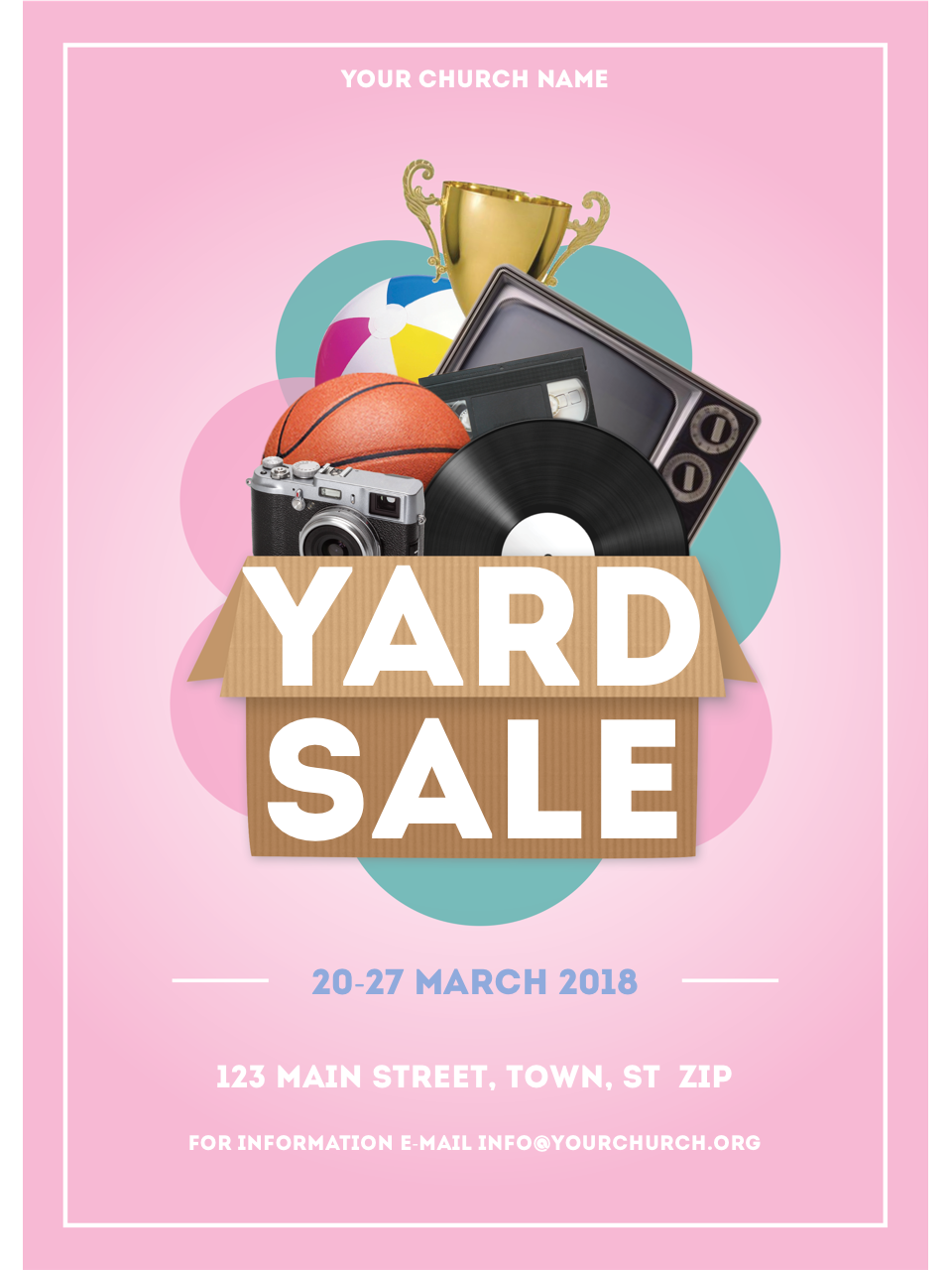
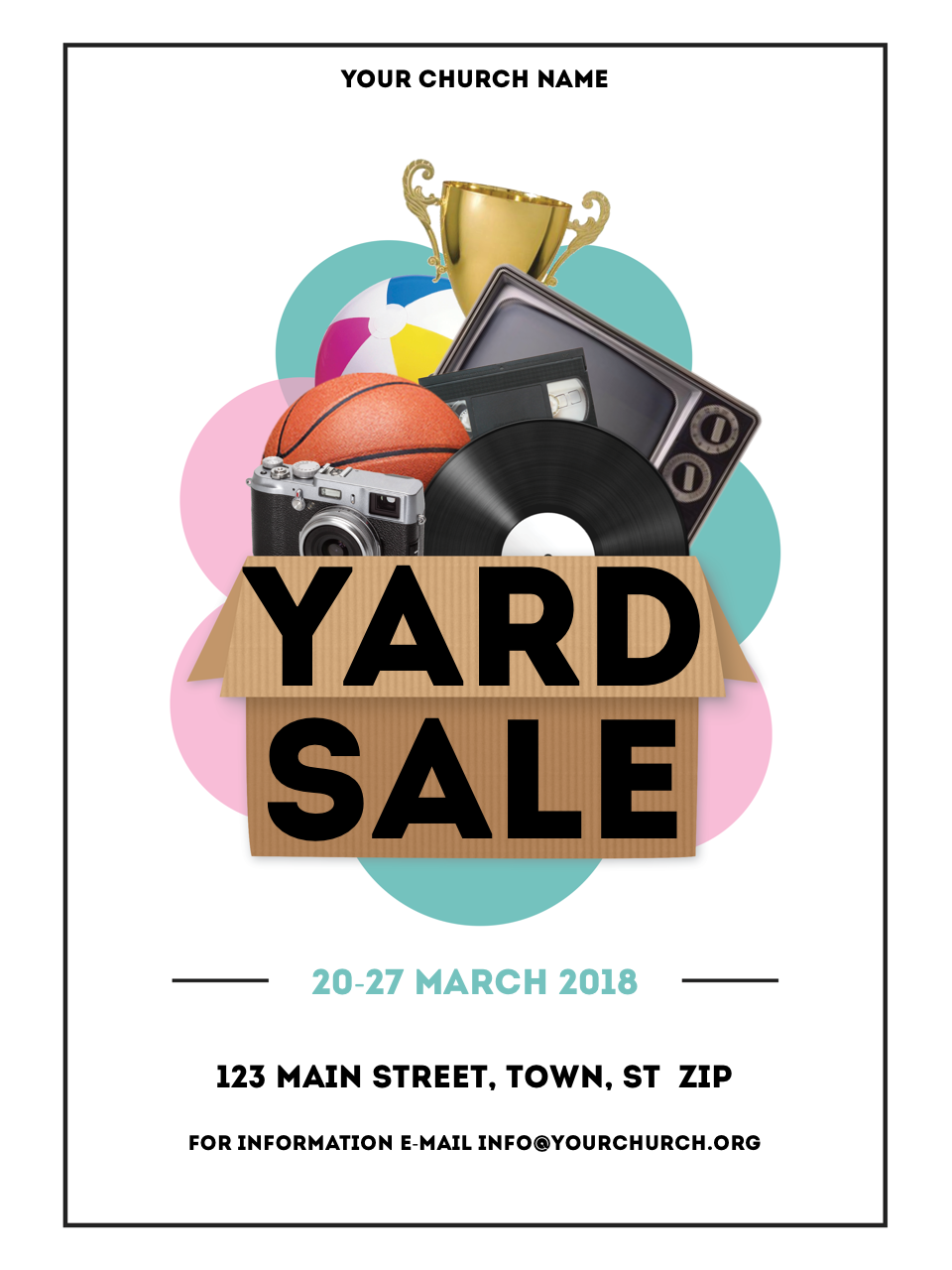
Use PCM Imago to create your own yard sale signs. Copy our prompt or create one of your own:
church yard sale sign, bold readable lettering "Yard Sale", bright inviting colors, simple clean design, minimal composition with clear negative space, no clutter, high contrast, composition with text space, no text distortion

We've got you covered with our practical church yard sale ideas. A church yard sale is more than a way to clear out clutter—it’s an opportunity to raise funds, bring people together, and extend hospitality to your community.
Without a clear plan, yard sales can quickly become disorganized, under-promoted, and less effective than they could be.
The good news? With the right approach, your church yard sale can be both well-organized and deeply impactful.
This guide will walk you step-by-step through how to organize a church yard sale that actually works.
The terms yard sale, rummage sale, and tag sale are often used interchangeably to describe an event where secondhand items are sold directly to the public, usually as a fundraiser or community activity. While regional preferences vary—“yard sale” is common in the South and Midwest, “tag sale” is more often used in the Northeast, and “rummage sale” is frequently associated with churches or nonprofits—the core idea is the same: gathering donated or unused items, pricing them for resale, and inviting the community to shop. For most purposes, these terms can be treated as equivalent, especially in a church context where the focus is on both fundraising and connection.
Before collecting a single donation, define your purpose. Ask:
Many churches find success when they connect the sale to a specific mission or ministry. A clear purpose helps motivate volunteers and communicate value to your community.
You don’t need a large committee—but you do need clear roles. At minimum, assign:
This prevents burnout and keeps things running smoothly.
The most successful church yard sales start early.
Planning ahead reduces stress and leads to a more organized sale. We've created a free Microsoft Excel template you can download and use to organize and plan:
Donations are the foundation of your sale—but they need structure. Some suggestions:
Common categories include:
The more organized your intake, the easier everything else becomes.
Key church yard sale ideas focus on organization. Organization directly impacts how much you sell.
Well-organized displays help people find what they need—and buy more.
Think of your yard sale as an experience, not just a transaction.
A welcoming environment encourages people to stay longer—and spend more.
Even the best yard sale won’t succeed if people don’t know about it.
Start promoting at least 2–3 weeks in advance, and increase frequency as the date approaches.
Don’t lose sales due to payment friction.
Post signage so shoppers know what payment methods you accept.
A smooth sale day starts with preparation.
Remember: flexibility and a positive attitude go a long way.
Don’t wait until the end to figure this out.
Having a plan keeps cleanup simple and stress-free.
A church yard sale can also be an act of hospitality. Consider:
This transforms the event from a fundraiser into meaningful outreach.
Organizing a church yard sale doesn’t have to be overwhelming. With a clear plan, strong organization, and a focus on hospitality, your church can create an event that:
Start early, stay organized, and focus on people—not just sales—and your yard sale will be a success.