No products in the cart.
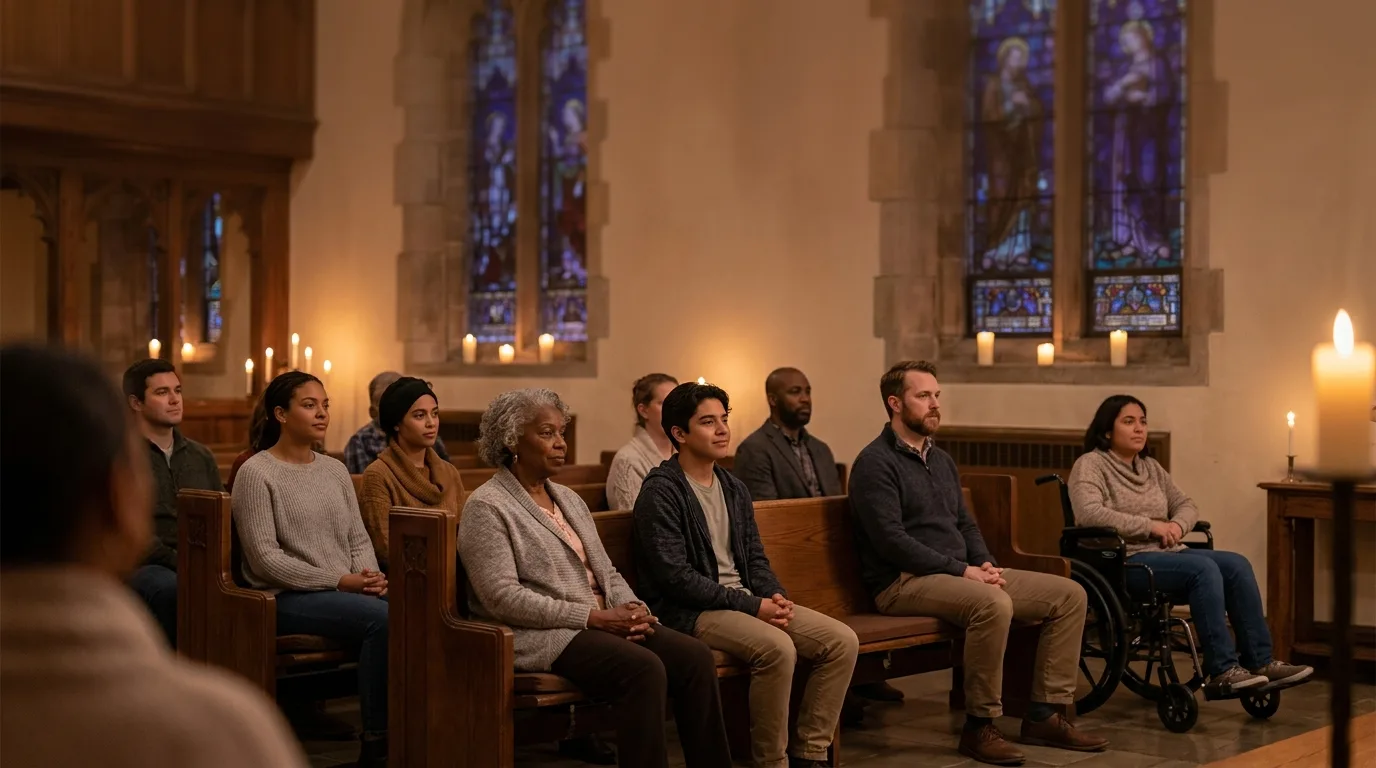
Someone in your sanctuary this Sunday will be bracing for something. It might be the veteran who flinches when the organ swells. It might be the woman who left her last church after the pastor told her to forgive the husband who was hurting her. It might be the young adult whose youth group sent them to conversion therapy, sitting in a pew for the first time in six years, one hand on the end of the row.
You won't know who they are. Trauma-informed worship starts from that fact.
It isn't a program or a certification. It's a way of planning worship so that people carrying trauma can stay in the room, take part on their own terms, and meet a God who doesn't ask them to relive their worst moments in order to belong. For affirming congregations it also means being honest about something harder: for many of the people you most want to welcome, the trauma happened in church.
The term comes from trauma-informed care, an approach used across healthcare, schools, and social services. The U.S. Substance Abuse and Mental Health Services Administration (SAMHSA) describes six principles behind it: safety; trustworthiness and transparency; peer support; collaboration and mutuality; empowerment, voice, and choice; and attention to cultural, historical, and gender issues.
Each one translates directly into worship:
It helps to be clear about what trauma-informed worship is not. It isn't avoiding hard scripture, removing lament, or turning the sermon into a therapy session. The Bible is full of trauma, and it doesn't look away. Psalm 88 ends in darkness with no resolution. Lamentations sits in the ruins of Jerusalem. The risen Christ still carries his wounds and invites Thomas to touch them (John 20:24–29). Trauma-informed worship doesn't sanitize these texts. It changes how they are held.
Most writing on trauma-informed worship focuses on trauma from outside: violence, disaster, abuse, war. Affirming congregations need to add a category that others often leave out. Many of the people walking through your doors were harmed by church itself.
That harm takes many forms. Some were told their sexuality or gender made them an abomination. Some were sent to conversion therapy. Some women were told their calling didn't count. Some survivors watched their abusers get protected by leadership. Some children were raised on vivid sermons about hell. For these worshipers, the triggers may not be dramatic at all. It can be the smell of a sanctuary, a particular hymn, the cadence of an invitation to come forward, or a pastor's robe.
If that describes you, or someone you love, here is what is true: what happened to you was wrong, it was not God's judgment on you, and you are not required to trust any church again on anyone's timeline but your own.
For pastors, this changes a few things:
A welcome worship leaders can adapt:
"If a church has hurt you, you don't owe us your trust today. Sit wherever you like. Step out when you need to, and come back if you want to. You are welcome here exactly as you are, including who you are and whom you love."
For more on building that welcome into your church's policies and pastoral care, see our guide to creating a welcoming and affirming church.
The simplest trauma-informed change costs nothing: replace commands with invitations. The theology stays the same. What changes is who has control over their own body in the room.
"Please stand" becomes "Rise in body or in spirit" or "Stand as you are able." "Close your eyes" becomes "You're welcome to close your eyes or keep them open." At the passing of the peace, offer choices: a handshake, a wave, a nod, or simply a smile. Nobody should have to touch a stranger to take part in worship.
For people who were taught they were worthless, some confessions of sin reinforce the injury. Trauma-informed confession names what we have done and failed to do, including the harm our systems cause, without asking anyone to declare that they are nothing. It is followed promptly by assurance, so that no one is left sitting in accusation.
One voice: Holy One, we confess that we have not loved as you love. We have looked away from pain we could have eased. We have stayed silent when our voices were needed.
All: Hold us accountable, and hold us close.
One voice: Hear the good news: nothing we have done or left undone places us beyond the reach of God's love. We are forgiven, and we are free to begin again.
This is not avoidance. It is what allows survivors to stay for the rest of the story, including the sermon that may finally treat Tamar as a person rather than a plot point.
"This morning's reading from 2 Samuel 13 tells the story of Tamar's assault. If you need to step out, the doors are open, and you'll be welcomed back."
A brief, calm notice before a hard reading respects the listener without watering down the scripture:
When violence is in the news, name it truthfully without graphic detail. Pray for the people and the place in general terms, and let people know beforehand if the prayers will address something especially painful. Children are listening, and so are adults for whom the headline is personal.
A printed or projected order of worship, spoken transitions ("After this hymn, we'll share a time of silence"), and no surprise participation all build the trust that traumatized nervous systems watch for. Predictability isn't boring. It's what lets people stop watching the exits.
Your screens are part of the liturgy. They are often the first thing people see and the last thing they notice they've absorbed. A trauma-informed approach to worship visuals includes:
Some days on the calendar are harder than others. A trauma-informed congregation plans for them rather than being caught off guard.
Mother's Day and Father's Day can be painful for people who have lost parents, lost children, experienced infertility, or survived abuse at home. Our inclusive Mother's Day church ideas include language that honors the whole range of experience. All Saints Sunday offers a structured way to name the dead. Funerals ask worship leaders to hold raw grief with steady hands, and our funeral and memorial liturgy for affirming congregations is built for that.
December is where this matters most. The cheer of the season makes grief feel lonelier, and many churches respond with a Blue Christmas or Longest Night service: a quiet, candlelit space where loss can be spoken aloud. It may be the most widely practiced trauma-informed liturgy in mainline churches today. If you're planning one this year, start with our free Longest Night liturgy for Blue Christmas services, which includes candle lighting, a naming of losses, and leader notes.
Worship can be a place of healing. It isn't treatment. Trauma-informed ministry includes knowing when to refer someone to professional care, and having names ready before the moment comes.
Keep a short list of licensed counselors in your area, including at least one who works specifically with religious trauma and is affirming of LGBTQ+ clients. Post the 988 Suicide & Crisis Lifeline (call or text 988 in the U.S.) where people can find it without asking. Train your ushers and greeters to recognize distress and to know who to bring it to.
Remember that you're carrying weight too. Clergy absorb the stories they hear. Your own care is part of trauma-informed ministry, not a separate matter. For more, read how churches can support mental health.
You don't need a committee to begin. Pick one change this week:
Small changes, repeated weekly, teach a congregation that this is a place where people can breathe.
Trauma-informed worship depends on imagery you can trust. PCM Complete gives you our full library of worship graphics, slides, and gentle video loops, created for affirming congregations and ready for every season.
Browse wreath, candle, and nativity visuals that stay quiet enough for a sanctuary holding grief.
PCM Lumen helps you write calls to worship, confessions, and prayers that invite rather than command, and it's affirming by default. Try it free for 14 days.
What is trauma-informed worship?
Trauma-informed worship is a way of planning services so that people carrying trauma can participate safely and on their own terms. It draws on the principles of trauma-informed care, including safety, transparency, and choice. In practice that means invitational language, predictable structure, careful imagery, and clear welcome.
Does trauma-informed worship mean avoiding difficult scripture?
No. Scripture is full of trauma, and trauma-informed worship reads it honestly. What changes is how hard texts are introduced: a brief, calm notice before a difficult reading lets survivors choose how to engage, and it often allows them to stay for the whole service.
How is trauma-informed worship different in an affirming church?
Affirming churches welcome many people who were harmed by other churches, including LGBTQ+ people, women who were silenced, and survivors of spiritual abuse. Trauma-informed worship in an affirming church names that church hurt directly, states the congregation's welcome out loud, and removes pressure points such as surprise requests to come forward.
Can a small church practice trauma-informed worship without special training?
Yes. Many of the most effective changes cost nothing: replacing commands with invitations, printing the order of worship, reviewing slides for graphic imagery, and keeping a counselor referral list ready. Formal training is valuable but not required to begin.
Is a Blue Christmas service trauma-informed?
A Blue Christmas or Longest Night service is one of the most common trauma-aware liturgies in mainline churches. It makes space for grief during a season that often pressures people to feel joyful, and it's typically quiet, candlelit, and invitational.