No products in the cart.
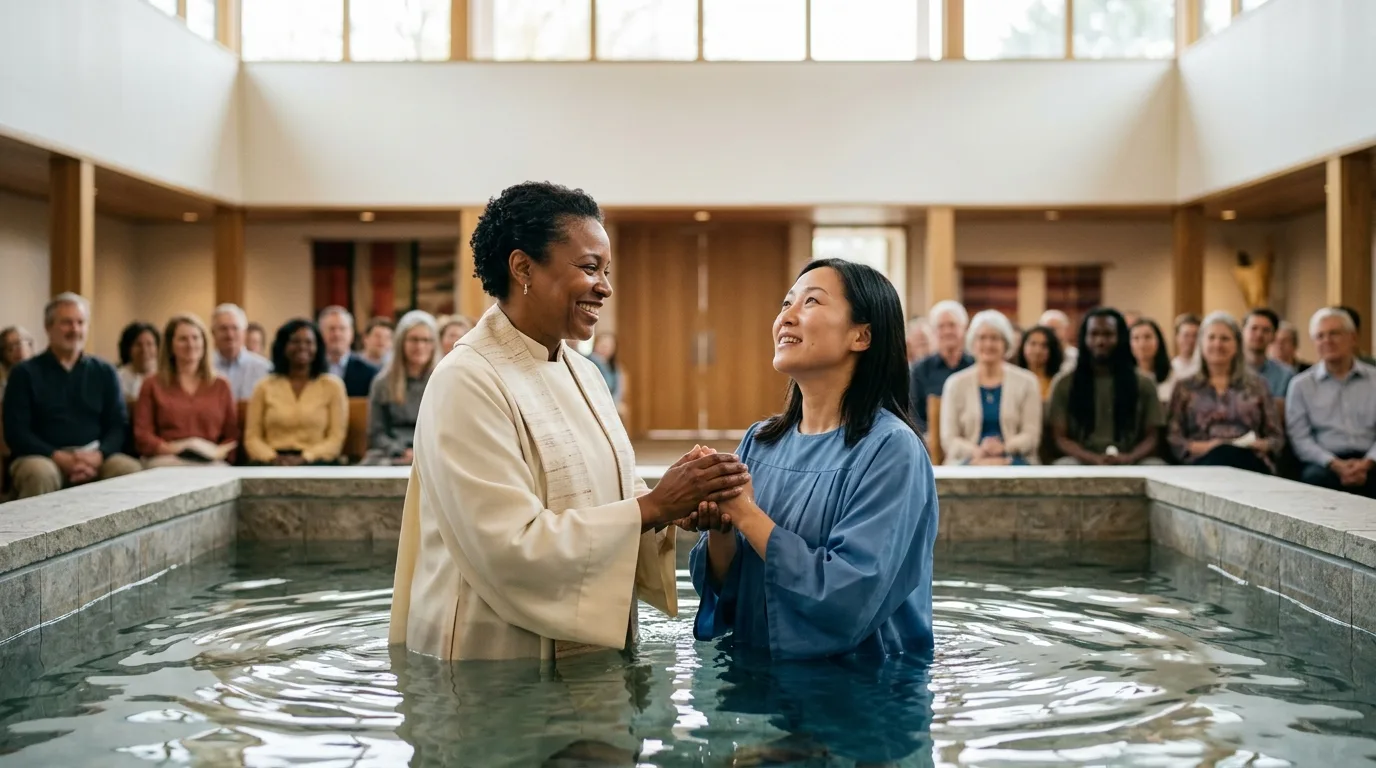
However your congregation does it — a heated pool on the chancel steps, a bowl of water and a squirming eight-month-old, a river in October, a font that has stood in the same corner since 1912 — the planning problems are surprisingly similar. This is a practical guide to the water, written for churches where the welcome is not conditional.
Baptism is the one service most congregations plan least often and prepare for most anxiously. It is also, more than almost anything else you will do this year, a public statement about who belongs. That is worth getting right, and it is worth not improvising twenty minutes beforehand.
Christian communities baptize in two broad patterns, and this page covers both, because congregations rarely sit as neatly inside one as denominational literature suggests.
Baptism follows a person's own profession of faith, usually by full immersion, at whatever age that profession comes. Common in Baptist, non-denominational, Pentecostal and many independent congregations, and increasingly requested inside mainline churches by adults who came to faith later.
Baptism marks a child's inclusion in the community before that child can ask for it, usually by pouring or sprinkling at a font, with the congregation making promises on the child's behalf. Standard in UCC, ELCA, Episcopal, PCUSA, UMC and Disciples practice.
The theological argument between these two is centuries old and this page is not going to settle it. What matters for planning is that they are different services with different logistics, different pastoral pressure points, and different things that go wrong. If your congregation practices one and is asked for the other, the section you need is below.
Worth naming out loud
The practice is older than the argument. Ritual immersion for purification and for welcoming newcomers was well established in Jewish life before John was baptizing anyone in the Jordan, and Christian baptism grew from that soil rather than replacing it. It's worth saying so, particularly if your baptismal liturgy has ever implied that the church invented water.
Immersion is the more logistically demanding of the two, and almost all of the difficulty is physical rather than liturgical.
The physical demands are smaller and the pastoral ones are larger, because you are working with a family system rather than a single person.
Baptismal language sticks. People quote their own baptism back decades later, usually a single phrase, and it is almost never the phrase you'd have predicted. That's worth some care in drafting.
If you want to go further on this, our guide to inclusive language in worship works through the same decisions across a whole service, and Bible verses for an affirming worship service collects texts that carry the welcome without needing a footnote.
There is a story in Acts 8 that most baptismal liturgies quietly skip. A foreign official — a eunuch, a person whose body and gender did not fit the categories his religious world had for either, and who would have been barred from the temple's inner courts on exactly that basis — reads Isaiah on a desert road, understands it, sees water, and asks one question: "What is to prevent me from being baptized?"
The answer the text gives is nothing. Not a probationary period, not a corrected body, not a resolved category. They stop the chariot and go down into the water.
If you are trans, or queer, or divorced, or in recovery, or newly out, or unsure whether you count as a believer on a given Tuesday, that question is yours and the answer has not changed. If you were baptized years ago under a name you no longer use, ask your pastor about a reaffirmation of baptism — most traditions have a rite for it, and where the rite is thin, it can be written. You do not need a second baptism to have your own name spoken over the water.
And if you are the one planning the service: say some version of this out loud, in the liturgy, where people can hear it. Welcome that is only implied is not yet welcome. If your congregation is still working out how to say it, this guide to becoming welcoming and affirming is where to start. We also have a collection of diverse and inclusive of Baptism images for progressive churches.
A skeleton, not a script. It fits either practice with the obvious substitutions, and it runs about twelve minutes inside a regular Sunday service.
Free download
The full version of this order — both professions, the thanksgiving over the water, the congregation's promise, a reaffirmation rite for someone baptized under a name they no longer use, and a planner's checklist — is available as a free PDF. No signup, no paywall, and you're free to reproduce and adapt it in worship without asking us.
Related planning guides
Baptism sits alongside the other services congregations plan rarely and want to get right. Our Water Communion guide covers the ingathering ritual that shares baptism's imagery, World Communion Sunday covers the table, and the funeral and memorial liturgy covers the other end of the same journey. If you're placing a baptism in the church year, Baptism of the Lord falls in the Epiphany season, and liturgical colors has the paraments question.
Two practical notes on the visual side. First, baptism imagery is unusually easy to get wrong: most stock libraries offer either a white infant in a lace gown or a stadium-scale immersion, and neither looks like most congregations. Second, whatever you project needs to be readable from the back row while the room's attention is on the water, which argues for fewer words and larger type than you'd normally use.
Our baptism collection covers both practices — immersion and font — across worship backgrounds, PowerPoint sets, flyers, social templates and video loops, all built for congregations where the welcome is explicit. If you're building the slides yourself, putting liturgy on slides covers the typography, and a new free background lands every month.
Not according to most Christian traditions. Immersion, pouring and sprinkling are all recognized as valid baptism across the great majority of denominations, and the ancient church appears to have used whatever water was available. Some traditions, principally Baptist and many non-denominational churches, hold immersion to be the only proper form. If you are moving between traditions, ask the receiving congregation directly rather than assuming.
This is where traditions genuinely disagree. Most mainline denominations do not rebaptize, holding that baptism is God's act and does not need repeating, and instead offer a reaffirmation of baptismal vows, which can be as public and as watery as the person wants. Believer's-baptism traditions generally hold that infant baptism is not baptism and will baptize an adult on profession of faith. Both positions are held in good faith. Ask your pastor what your congregation practices, and what it offers if the answer is no.
Dark, loose clothing that is not white and does not cling when wet, plus a complete change of clothes including underwear, and a towel. Many churches provide robes. Ask ahead of time rather than on the day.
Yes. A person is baptized under the name they use, and clergy in affirming congregations do this regularly. If you were baptized previously under a different name, most traditions offer a reaffirmation or renaming rite in which your name is spoken over the water; where a formal rite doesn't exist, one can be written. Talk to your pastor, and know that this is an ordinary pastoral request rather than an imposition.
Belonging and baptism are not the same thing, and in most progressive congregations people participate fully in the life of the church long before, and sometimes without ever, being baptized. Baptism is usually tied to formal membership and to certain roles, and the specifics vary by denomination. Nobody should feel rushed toward the water to justify their presence.
Planning one soon? A single conversation with the person or family being baptized — covering clothing, photography, mobility, who holds what, and what they want said — prevents nearly every problem on this page. Have it a week out, not on the morning.