No products in the cart.
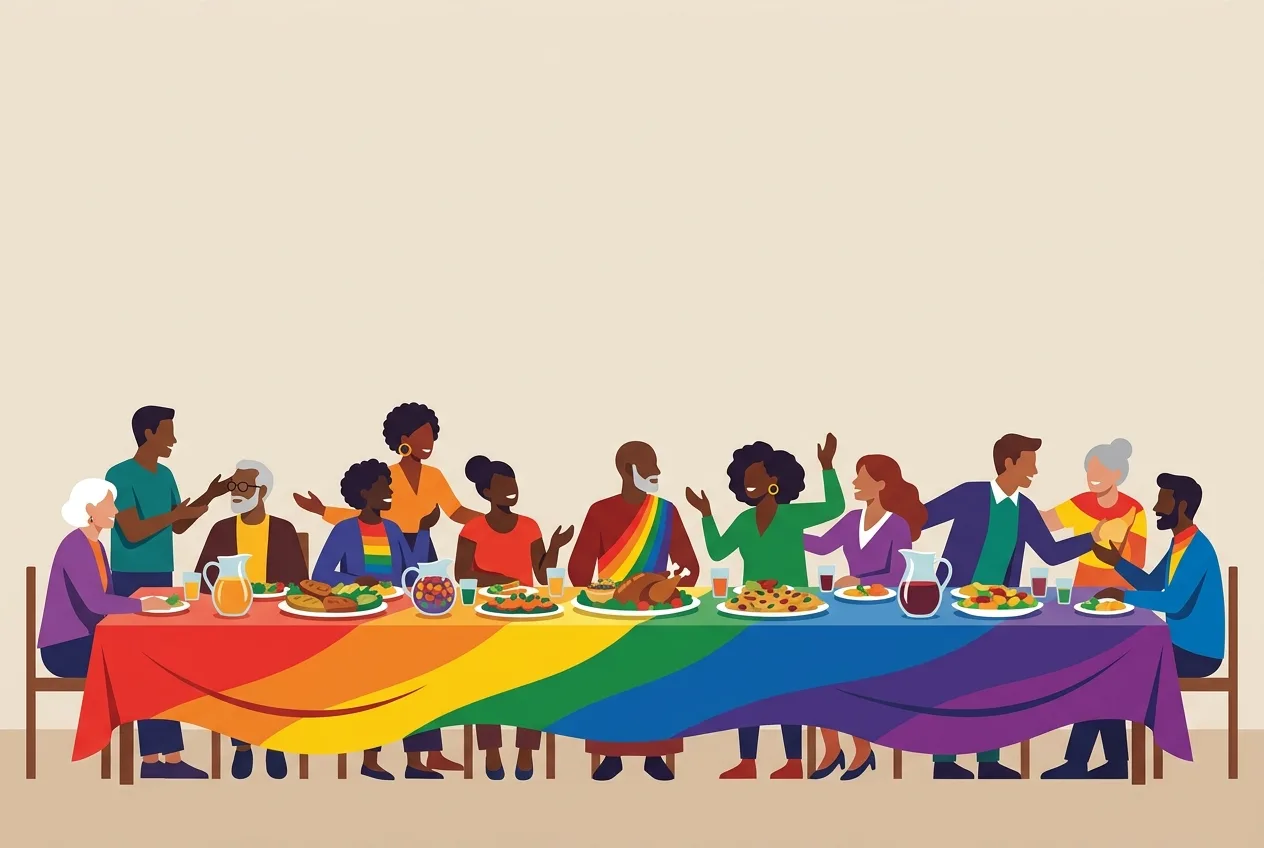
For progressive Christian pastors, Pride Month presents one of the most significant preaching opportunities of the year — and one of the most underserved. Despite the surge in LGBTQ+ affirming theology across mainline denominations, genuinely useful sermon resources written specifically for progressive congregations remain scarce. Most pastors approaching a Pride Month pulpit are piecing things together on their own.
This guide is designed to change that. What follows is a collection of Pride Month sermon ideas, complete with scriptural anchors, thematic frameworks, and practical preaching guidance — drawn from the best of progressive Christian theology and written for pastors who want to do this well.
Whether you're planning a single affirming sermon, a full Pride Month series, or looking for ways to weave LGBTQ+ inclusion into your regular liturgical calendar, you'll find a starting place here.
Some affirming churches mark Pride Month with a flag in the sanctuary, a rainbow bulletin insert, and a general sense of warmth. That's a start. But for many LGBTQ+ Christians sitting in those pews — many of whom have spent years being told the church had no place for them — a sermon that names their experience directly, that preaches the full dignity of their lives from the pulpit, carries a weight that no flag or fellowship dinner can replicate.
Preaching is the primary act of theological formation in most Protestant congregations. If LGBTQ+ inclusion never makes it into a sermon, the message — however unintentionally — is that it doesn't quite rise to the level of the gospel. For pastors committed to full affirmation, Pride Month is the moment to close that gap.
It's also worth naming that these sermons matter for the whole congregation, not just LGBTQ+ members. Parents of LGBTQ+ children, friends and siblings navigating complex family dynamics, congregants who were raised with anti-LGBTQ+ theology and are in the process of reconsidering it — all of these people need to hear affirming theology preached with care and conviction. A Pride Month sermon is pastoral care for the entire community.
Before diving into specific sermon ideas, a few framing principles are worth naming — things that distinguish a truly affirming sermon from one that is merely LGBTQ+-adjacent.
Preach to the LGBTQ+ person in the room, not about them. The most common failure mode in well-intentioned sermons about LGBTQ+ inclusion is speaking of LGBTQ+ people in the third person — as a group to be understood, welcomed, or advocated for — rather than addressing them directly as beloved members of the congregation. An affirming sermon speaks to the full humanity of every person present, LGBTQ+ or not.
Let scripture lead. Progressive Christian preaching doesn't avoid the hard passages — it engages them honestly. Addressing the "clobber passages" (the handful of texts historically used to condemn LGBTQ+ people) with careful exegesis is often more powerful than simply preaching the affirming passages, because it meets people where their actual theological questions live.
Avoid the rescue narrative. Sermons that frame LGBTQ+ people primarily as wounded, marginalized, or in need of the church's protection can inadvertently center the congregation's generosity rather than the full agency and dignity of LGBTQ+ individuals. The best affirming sermons center abundance and celebration, not charity.
Name the history honestly. The church has caused real harm to LGBTQ+ people. Acknowledging that history — without drowning in guilt — is both theologically honest and pastorally important. It creates space for LGBTQ+ people to trust that the welcome they're being offered is self-aware, not naive.
Sermon 1: "You Are Fearfully and Wonderfully Made" (Psalm 139) Open the series with Psalm 139 as a meditation on the fullness and particularity of each person's creation. The psalmist's insistence that God has "knit together" every person in their mother's womb is an invitation to explore what it means that God creates human beings in all their diversity — including the diversity of sexual orientation and gender identity. This sermon can gently but directly challenge the idea that LGBTQ+ identities are a departure from creation, reframing them as part of the extraordinary complexity of what it means to be made in the image of God.
Preaching focus: What does it mean to be "fearfully and wonderfully made"? What parts of ourselves have we been taught to hide from God — and what would it mean to believe that God already knows and celebrates those parts of us?
Pastoral note: This sermon is particularly powerful when paired with an invitation for LGBTQ+ members to share brief testimonies — either from the pulpit or through a written collection displayed in the narthex.
Sermon 2: "The Word Became Flesh" (John 1:1-14) The doctrine of the incarnation — that God took on human flesh in all its particularity — has profound implications for how Christians understand embodied identity. This sermon explores the incarnation as a theological affirmation of bodily and sexual particularity, pushing back against traditions that have treated LGBTQ+ bodies as problems to be overcome. God chose a body. God chose specificity. The incarnation is a yes to human embodiment in all its forms.
Preaching focus: What does it mean that God became flesh — not generic humanity, but a specific person in a specific body? How does the incarnation shape the way we understand gender, sexuality, and the sacred nature of embodied identity?
Theological anchor: Draw on theologians like Marcella Althaus-Reid, whose work in "indecent theology" explores the liberating dimensions of the incarnation for queer bodies.
Sermon 3: "Called by Name" (Isaiah 43:1) The series closes with a sermon on vocation — the idea that each person is called by name, claimed by God, and sent into the world with gifts that matter. For LGBTQ+ Christians who have been told their identity disqualifies them from full participation in the life of the church, this sermon is a direct counter-proclamation: your name is known, your gifts are needed, your calling is real.
Preaching focus: "I have called you by name; you are mine." What does it mean to be claimed by God exactly as you are? What callings has the church missed by telling LGBTQ+ people their gifts weren't welcome?
Sermon 1: "What Does the Bible Actually Say?" — Engaging the Clobber Passages This is the sermon many progressive pastors are nervous to preach — and the one that often does the most good. The six passages traditionally used to condemn LGBTQ+ people (Genesis 19, Leviticus 18 and 20, Romans 1, 1 Corinthians 6, 1 Timothy 1) deserve honest, careful engagement from the pulpit. This sermon doesn't avoid them; it walks through them with good exegesis, historical context, and theological honesty — demonstrating that the case against LGBTQ+ inclusion is much weaker than many Christians have been taught to believe.
Preaching focus: What were these texts actually addressing in their original contexts? What happens when we read them through the lens of the broader biblical witness — particularly the commandment to love, the radical inclusion of the early church, and the Spirit's ongoing work of expanding the community of faith?
Recommended resources for sermon preparation: Matthew Vines' God and the Gay Christian, David Gushee's Changing Our Mind, and Ken Wilson's A Letter to My Congregation are all accessible scholarly treatments of these texts from an affirming perspective.
Sermon 2: "Love Does No Harm" (Romans 13:8-10) Having engaged the difficult passages in the first sermon, this one builds the positive biblical case for LGBTQ+ inclusion. Paul's summary of the law in Romans 13 — "Love does no harm to a neighbor; therefore love is the fulfilling of the law" — becomes the hermeneutical key: a framework for evaluating any ethical question, including questions about sexual and gender identity. If the measure of faithfulness is love that does no harm, what does faithfulness look like toward our LGBTQ+ neighbors, family members, and congregation members?
Preaching focus: What would it mean to apply Paul's love-as-law-fulfillment framework to LGBTQ+ inclusion? How does the Great Commandment shape the way we read every other text?
Sermon 1: "Who Is Welcome at This Table?" (Luke 14:12-24) Jesus' parable of the great banquet — in which the invited guests refuse to come and the host fills the table with "the poor, the crippled, the blind, and the lame" — is one of the most radical inclusion texts in the New Testament. This sermon reads the parable as an indictment of every church that has decided who is and isn't worthy of the table, and as an invitation to ask who is currently being left off the guest list.
Preaching focus: Who are the people in our community that our church has treated as uninvited guests? What would it look like to go out into the roads and lanes and compel them to come in — not as a project, but as a genuine extension of the table?
Sermon 2: "Neither Eunuch Nor Free" (Acts 8:26-40) The story of Philip and the Ethiopian eunuch is one of the most important and underpreached texts for LGBTQ+ inclusion. The Ethiopian is a court official — a person of significant standing — but he is also a eunuch, a category of person explicitly excluded from full participation in the Israelite assembly under Deuteronomy 23:1. His question — "What is to prevent me from being baptized?" — is one of the most theologically charged questions in Acts. Philip's answer is: nothing. Nothing prevents you.
Preaching focus: What does it mean that the Spirit led Philip to the very person the law said didn't belong? What does Philip's answer to the eunuch's question mean for the church's response to LGBTQ+ people asking the same question today?
Pastoral note: This text has become one of the most beloved in progressive LGBTQ+ Christian theology for good reason. Preaching it as an explicit affirmation of LGBTQ+ inclusion — naming the connection directly — is powerful and well-supported by the text.
Sermon 3: "A House of Prayer for All People" (Isaiah 56:3-8) Isaiah 56 is the direct scriptural answer to Deuteronomy 23. In one of the most remarkable reversals in the Hebrew Bible, the prophet declares that foreigners and eunuchs — precisely the people the law excluded — will be gathered into God's house. "I will give them an everlasting name that shall not be cut off." This sermon traces the arc of inclusion through scripture as a theological argument: the movement of scripture is consistently toward a wider welcome, not a narrower one.
Preaching focus: What does it mean that scripture contains its own corrective — that the voices of inclusion are present alongside and ultimately overriding the voices of exclusion? What does this arc mean for the church's ongoing discernment about LGBTQ+ inclusion?
Sermon 4: "This Is My Body" (1 Corinthians 11:23-26) The series closes at the communion table — the central act of Christian worship and the most tangible expression of the community of faith. This sermon reflects on communion as the ultimate affirmation of inclusion: a table set not for the righteous but for all who come in faith, without condition. For LGBTQ+ Christians who have been told they cannot receive communion, or who have been made to feel unworthy of the table, this sermon is a direct pastoral proclamation: the table is set for you.
Preaching focus: What does it mean that Jesus said "this is my body" at a table where he knew every person present would fail him? What does the unconditional nature of that invitation mean for the way the church opens the table today?
Not every congregation will do a multi-week series. For pastors looking for a single strong Pride Sunday sermon, here are several standalone options:
"Stonewall and the Prophetic Tradition" — A sermon that places the Stonewall Uprising of June 1969 in the context of the Hebrew prophetic tradition, reading the uprising as a cry for justice that resonates with Amos, Isaiah, and Micah's calls to defend the vulnerable and dismantle systems of oppression. This sermon works particularly well for congregations with a strong social justice identity.
"The Spirit Moves Where It Wills" (John 3:8) — A Pentecost-season sermon (Pride Month and Pentecost often overlap) on the freedom and unpredictability of the Holy Spirit, which refuses to be constrained by human categories of belonging. The Spirit, Jesus tells Nicodemus, "blows where it wills" — a sermon exploring what it means that the Spirit has been demonstrably and abundantly present in LGBTQ+ Christian lives and communities.
"Known and Loved" (1 Corinthians 13) — A Pride Month reading of the great love chapter, exploring what it means to be fully known and fully loved — and the particular resonance of that promise for people who have spent years hiding parts of themselves from their faith communities. This sermon is quietly powerful and works well in congregations of varying theological positions.
"The Prodigal Church" (Luke 15:11-32) — A reversal of the familiar prodigal son parable, in which the church plays the role of the elder brother — the one who stayed home, kept the rules, and resented the father's lavish welcome for the returning child. This sermon is a gentle but direct challenge to congregations that have been slow to fully embrace LGBTQ+ inclusion, framing the return not as the church welcoming LGBTQ+ people home, but as the church coming home to the fullness of the gospel.
On length and format: Pride Month sermons tend to do best when they are focused and unhurried — 20 to 25 minutes for a traditional sermon format, with space for silence and emotion. These sermons often carry significant pastoral weight for listeners, and a rushed pace can undercut the impact.
On personal testimony: If the pastor has a personal story connected to LGBTQ+ inclusion — a family member, a pivotal moment of theological change, a specific relationship that shaped their convictions — sharing it briefly and carefully in the sermon can be deeply effective. Authenticity is the most powerful homiletical tool available.
On anticipating the congregation: For congregations in the process of becoming affirming, or for churches where theological opinions are mixed, it's worth naming directly in the sermon that you know this territory is not settled for everyone — and that you're preaching from conviction while holding space for continued discernment. This doesn't require hedging on the substance; it simply acknowledges the pastoral reality of a congregation in process.
On LGBTQ+ voices in worship: A Pride Sunday sermon lands differently when it's part of a service that also includes LGBTQ+ leadership in worship — readers, liturgists, musicians, or preachers. If your church doesn't yet have LGBTQ+ people in visible worship leadership, naming that aspiration is itself a pastoral act.
On the week after: Consider what pastoral follow-up is available after a Pride Sunday sermon. LGBTQ+ members — particularly those newer to the congregation or navigating their own faith journey — may want to connect. Having a simple pathway for that (a note in the bulletin, a brief mention at the end of the sermon, an email address) makes the sermon's welcome concrete and actionable.
A Pride Month sermon gains resonance when it's embedded in a full liturgical experience. Consider pairing your sermon with:
Affirmation of baptism — Many traditions include a reaffirmation of baptismal vows as a liturgical element. Framing this on Pride Sunday as an affirmation of identity — "you are claimed, you are named, you belong" — makes it a powerful complement to any of the sermon series above.
Responsive reading — A call-and-response liturgy that names LGBTQ+ identities explicitly as beloved and created by God gives the whole congregation a way to participate in the affirmation, not just receive it passively.
Testimony or story sharing — A brief personal testimony from an LGBTQ+ congregation member, placed before or after the sermon, grounds the theological in the personal in a way that is often more affecting than any sermon illustration.
Communion — Closing a Pride Sunday service with open communion, with explicit language about who is welcome at the table, completes the theological arc of the service in a way that is liturgically and pastorally complete.
Music — Hymnody matters. "All Are Welcome" (Marty Haugen), "God of the Sparrow," "In Christ There Is No East or West," and contemporary worship songs from affirming artists like Sleeping at Last can carry theological weight in a service that a sermon alone sometimes cannot.
For downloadable worship backgrounds and slides to support your Pride Month services, explore PCM's LGBTQ+ worship media collection.

a progressive Christian pastor preaching at a sunlit pulpit, warm golden light streaming through stained glass windows casting rainbow colors across the sanctuary, diverse affirming congregation, painted illustration style, wide composition with text space at top or bottom, reverent and joyful mood
an open Bible resting on a wooden surface, soft rainbow light falling across the pages from a nearby stained glass window, gentle bokeh background, sacred and contemplative mood, painterly illustration style, horizontal composition with generous negative space for sermon title text overlay
a diverse group of LGBTQ+ Christians gathered around a communion table in a progressive church, warm candlelight, inclusive and multicultural community, joyful yet reverent atmosphere, soft impressionist painting style, wide landscape composition with text space at top, Pride Month worship setting
hands of diverse people of different ages and skin tones reaching toward each other in a gesture of welcome and belonging, soft warm light, subtle rainbow color tones woven through the composition, sacred and affirming mood, contemporary Christian illustration style, centered composition with text space above and below
a solitary figure standing in the open doorway of a progressive Christian church, warm golden light spilling outward onto stone steps, a subtle rainbow arc visible in the sky above, mood of welcome and homecoming, painterly illustration style, portrait orientation with text space at top, LGBTQ+ affirming church setting
How do I preach about LGBTQ+ inclusion without making LGBTQ+ members feel tokenized? The key is to preach to the full congregation about the full gospel — not to hold up LGBTQ+ individuals as the subject of the church's charity. The best affirming sermons are primarily about who God is and what the church is called to be, with LGBTQ+ inclusion following naturally from those theological commitments. If LGBTQ+ members feel seen and valued by a sermon, it's usually because the sermon treated their lives as fully normal expressions of the human experience made in the image of God.
What if my congregation isn't fully affirming yet? Preaching toward your congregation's best self is one of the oldest and most important tasks of pastoral leadership. You don't have to wait for full consensus before preaching with conviction. The "Love Is the Fulfilling of the Law" series above is specifically designed for congregations in theological transition, and approaches the exegetical questions directly rather than assuming the conclusion. Preaching honestly and carefully — naming the theological disagreement while being clear about your own conviction — is more effective and more respectful than either avoiding the topic or proceeding as if the conversation is settled when it isn't.
How do I address the "clobber passages" in a sermon without getting lost in scholarship? The goal isn't a comprehensive academic lecture — it's pastoral clarity. You need to give your congregation enough historical and contextual information to understand that the traditional interpretations of these passages are contested and that serious scholars hold affirming positions. Two or three concrete exegetical points per passage, delivered with pastoral warmth rather than academic distance, is usually sufficient. Direct your congregation to accessible books (Matthew Vines, David Gushee) for deeper study.
Should Pride Month sermons only happen in June? No — and building LGBTQ+ affirmation into the preaching calendar year-round is actually more effective than concentrating it all in June. The sermon series above can be adapted for other seasons of the liturgical year. The Acts 8 eunuch text, for example, works beautifully in the season after Pentecost. The incarnation sermon fits naturally in Advent or Christmas. Building LGBTQ+ inclusion into the regular preaching rotation signals that it's not a special occasion topic but a core dimension of the church's theological identity.
Where can I find additional resources for affirming sermon preparation? Beyond the books mentioned above, the Open and Affirming Coalition (United Church of Christ), Reconciling Ministries Network (UMC), and the Believe Out Loud network maintain sermon resources specifically for affirming congregations. The African American Lectionary is also a valuable resource for preachers who want to engage LGBTQ+ inclusion from a perspective that centers communities of color.
This article is part of PCM's series on LGBTQ+ inclusion in progressive Christian communities. Related reading: How Progressive Christian Churches Can Celebrate LGBTQ+ Pride · How to Create an Open and Affirming Church · How to Find an LGBTQ+ Affirming Church
Looking for worship media to support your Pride Month services? Explore PCM's LGBTQ+ worship media collection or join PCM Membership for full access.