No products in the cart.
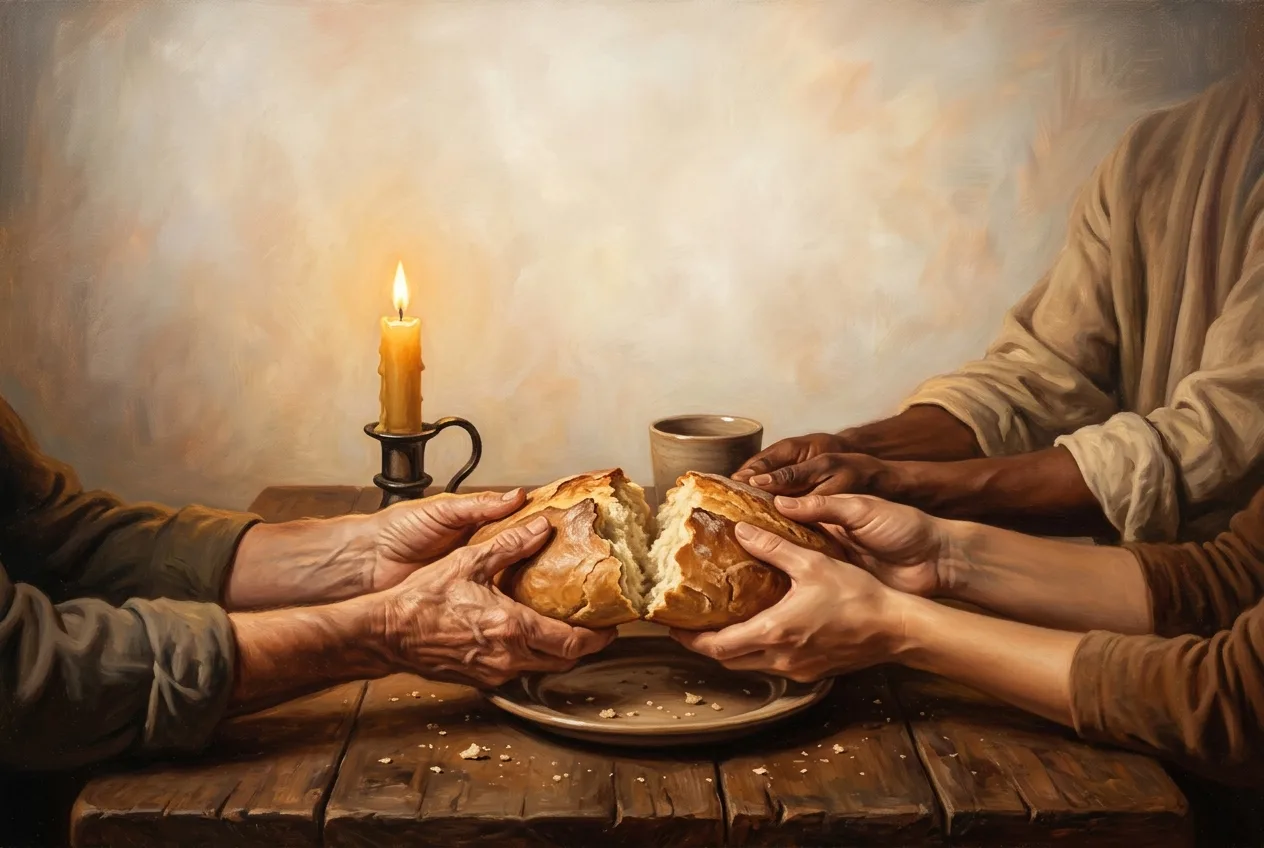
That simple conviction — that the communion table is open, not guarded — shapes everything about how progressive and mainline congregations approach this sacrament. The songs you choose, the words you speak, the media that fills the screen behind the bread and cup: all of it either reinforces radical welcome or quietly contradicts it.
This resource gathers the best communion songs, hymns, liturgical language, and worship media for congregations where the open table isn't a footnote — it's the theology.
The most-searched communion content on the web returns lists built for evangelical megachurches — Hillsong tracks, substitutionary atonement language, blood-centered imagery. Those songs aren't wrong for the congregations they serve. But they're not written for a UCC congregation observing an open table, or an ELCA church where the eucharist is the center of weekly liturgy, or an Episcopal parish where the words of institution have been spoken in essentially the same form for four centuries.
What follows is a working list of communion songs and hymns that hold up theologically in progressive, affirming, and mainline contexts.
"Here Is Bread" — Graham Kendrick A clean, accessible setting of the communion elements as encounter rather than transaction. Works well as an introit or during the distribution of elements. The lyric centers presence rather than punishment, which makes it flexible across traditions.
"Taste and See" — James E. Moore Jr. Based on Psalm 34, this setting is widely used in Catholic and mainline Protestant contexts alike. The refrain is singable on first hearing, which matters when your congregation includes visitors unfamiliar with your communion practice.
"Room At the Table" — Carrie Newcomer Less known in church settings but theologically aligned with progressive values — radical welcome, table fellowship, the sacred in the ordinary. Well-suited to congregations that want communion music to feel like an invitation rather than a summons.
"All Are Welcome" — Marty Haugen A staple in ELCA, UCC, and Episcopal congregations for good reason. The repeated affirmation of welcome makes it genuinely useful as a gathering song before communion, setting the theological tone before the liturgy begins.
"One Bread, One Body" — John Foley, SJ Rooted in 1 Corinthians 10 and 12, this song holds the twin themes of communion well — the particularity of the elements and the universality of the community formed at the table. Works in both traditional and contemporary worship settings.
"I Am the Bread of Life" — Suzanne Toolan, RSM Written in 1966 and found in ELW, The Hymnal 1982, and Catholic worship hymnals, this setting of John 6 is one of the most widely used communion hymns across Catholic and mainline Protestant traditions. The sweep of the refrain and its resurrection imagery make it versatile across communion and funeral liturgy alike.
"Let Us Break Bread Together" A spiritual rooted in the early African American church. The posture of kneeling toward the east and crying "Lord, have mercy" connects communion to a global, historical Christian practice. One of the most theologically spacious communion hymns in the canon.
"For the Bread Which You Have Broken" — Louis F. Benson Written in 1924 and found in most mainline hymnals (ELW, UMH, NCH, PH). The final verse — "In your service, Lord, defend us; in our hearts keep watch and ward; in the world to which you send us let your kingdom come, O Lord" — turns communion outward toward justice, which is exactly the move progressive congregations want to make.
"I Come with Joy" — Brian Wren Brian Wren is a favorite in progressive congregational songbooks for good reason — his hymnody is explicitly justice-oriented and theologically careful. This hymn frames communion as a joyful encounter with "the love that made us, makes us one," which resists both individualism and exclusivity at the table.
"Now the Silence" — Jaroslav Vajda Brief, spare, and extraordinary. Designed to be sung immediately before the Words of Institution, it captures the hush of the moment without demanding a particular atonement theology. Found in ELW and LBW.
"Draw Us in the Spirit's Tether" — Percy Dearmer A quiet, contemplative hymn that frames communion as the gathering of disciples rather than a transaction. The imagery of being "drawn" together works well in congregations emphasizing the community-forming dimension of the sacrament.
"You Satisfy the Hungry Heart" — Omer Westendorf Also known by its refrain "Gift of Finest Wheat," this is a eucharistic hymn with broad appeal. Common in Catholic and mainline Protestant settings alike. The "finest wheat" imagery connects to creation and abundance rather than sacrifice, which opens different theological registers.
This is not our table. It belongs to Jesus, who welcomed everyone — the doubting, the wandering, the certain, and the searching. No one here can be too broken or too uncertain or too newly arrived to receive what is offered. Come.
On the night he was handed over, Jesus took bread, gave thanks, broke it, and said: This is my body, broken for you. Do this in remembrance of me. In the same way, he took the cup, saying: This is the cup of the new covenant in my blood. Do this, whenever you drink it, in remembrance of me. And so we proclaim the mystery of faith: Christ has died. Christ is risen. Christ will come again.
Wherever you come from, whatever you carry, whatever you have done or left undone — you are welcome here. This table is a foretaste of the world God is making: a world without borders, without hierarchies of worthiness, without gatekeeping. Come and eat. Come and drink. You belong here.
What we have received, we are sent to give. The bread and cup are not only for us — they are a rehearsal for the world we are called to make. Go in peace.
Communion services in progressive and mainline congregations tend to follow a four-fold shape — gathering, word, table, sending — though the specifics vary by tradition. Here is one order that works well across UCC, ELCA, Episcopal, and UMC contexts.
Gathering
Song of gathering (consider "All Are Welcome" or a psalm setting). Brief spoken welcome that names the open table explicitly — not as a disclaimer but as good news.
Word
Scripture reading and sermon or homily. For communion Sundays, consider a shorter message — 10 to 12 minutes — that opens the text rather than exhausting it, leaving room for the table to complete the proclamation. (See: sermonette topics for progressive churches)
Table
Sending
Brief sending words that connect the table to the week ahead. Benediction.
A well-paced communion service doesn't require more time than a typical Sunday — it requires different time. The sermon can be shorter. The musical meditation during distribution can carry significant weight. A simple, unhurried liturgy communicates more than an elaborate one rushed.
Your communion media — the worship backgrounds, graphics, and video elements on the screen during the service — should reinforce the same theology your liturgy expresses. An image of a beautifully set open table communicates something different from dramatic lighting on a cross. Both are valid; they serve different moments and different theological emphases.
PCM's communion media is designed for congregations that observe an open table and want the visual environment of their service to reflect that conviction.
What songs are appropriate for open table communion? Songs that center presence, welcome, and community tend to serve open table theology better than songs focused exclusively on sacrifice or blood. Hymns like "Let Us Break Bread Together," "I Come with Joy," and "For the Bread Which You Have Broken" have long histories in mainline congregations and hold up across a range of progressive theological positions. Contemporary songs like "All Are Welcome" and "Come to the Table" make the welcome explicit.
How do progressive churches handle the words of institution? Most progressive and mainline congregations retain the words of institution from scripture (1 Corinthians 11:23–26), which have ecumenical weight and deep communal memory. What varies is the framing — the invitation language that precedes the words of institution is where progressive congregations often make the open table explicit, naming who is welcome before the Words are spoken.
How often do progressive churches observe communion? This varies significantly by tradition. Episcopal and ELCA congregations typically observe communion weekly. UCC congregations vary widely — monthly and quarterly observance are both common. The UMC has moved toward more frequent communion over the past two decades. What matters less than frequency is intentionality: a communion service observed four times a year with full liturgical care forms community differently than a perfunctory weekly service.
What is an open table? An open table is a communion practice in which all are welcome to receive the bread and cup — regardless of baptismal status, church membership, theological certainty, or personal history. Progressive and many mainline congregations observe an open table as an expression of the radical welcome of Jesus, who ate with everyone.
Can I use AI to write communion liturgy? Yes — and done thoughtfully, AI writing tools can help you draft words of invitation, prayers of thanksgiving, and post-communion sending words that reflect your congregation's specific theological commitments. PCM Lumen is built specifically for progressive ministry contexts and can help you generate liturgical language that sounds like your congregation, not a generic template.