No products in the cart.
In the span of seventy-two hours, the world moves from costumes and candy to candlelight and the names of the beloved dead — from Halloween, to Día de los Muertos, to All Saints' and All Souls'. For an affirming congregation, these days aren't a tangle to sort out or a culture to resist. They're a single, connected season of welcome and remembrance. This guide brings the whole season together, with ideas, worship resources, and ready-to-use bilingual media for each observance.
It's easy to treat Halloween, Día de los Muertos, and All Saints' Day as three separate things that happen to land close together. They're better understood as one arc.
The English word "Halloween" is simply a worn-down form of All Hallows' Eve — the evening before All Hallows', the old name for All Saints' Day. October 31 was never meant to stand alone; it's the doorway into the days the church set aside to remember the saints and the faithful departed. Día de los Muertos, observed on those same November days, carries that remembrance in Indigenous and Latino tradition — welcoming the beloved dead home with marigolds, photographs, and joy.
Seen together, the season tells one story: that love is stronger than death, that those who came before remain part of us, and that a community of faith is the right place to hold both our laughter and our grief. The sections below walk through each observance — and you can take them as far as your congregation wishes, from a single trunk-or-treat to a full season of worship.
Halloween puts your whole neighborhood outside and looking for somewhere to belong — which makes it one of the most natural hospitality opportunities of the year. A welcoming church meets that moment with an open door rather than a closed one: a trunk-or-treat in the parking lot, a fall festival in the fellowship hall, or a gentle alternative for the families who'd prefer one.
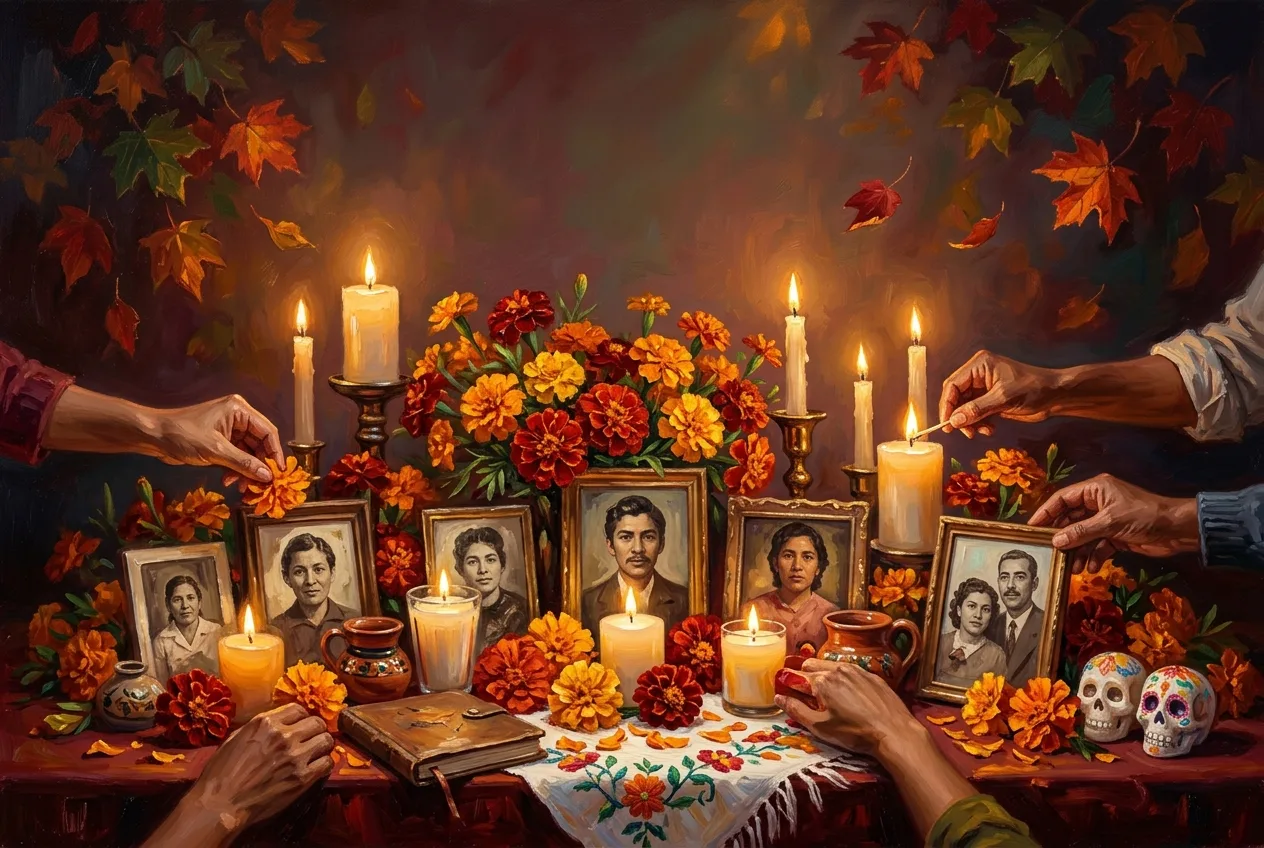
Día de los Muertos — the Day of the Dead — is not a celebration of death but of love that outlasts it. Families build an ofrenda, an altar holding photographs, candles, marigolds, and the foods their loved ones cherished, trusting that memory can feel like presence. For Christians, that conviction rhymes with the resurrection hope and the communion of saints — and for bilingual and Latino congregations, naming this observance in worship is a profound act of welcome.
All Saints' Day (November 1) and All Souls' Day (November 2) are the destination the whole season has been moving toward — the church's own days for remembering the great company of the faithful, living and dead. Many congregations mark them by reading aloud the names of those who have died in the past year, lighting candles, and preaching the communion of saints: the long, unbroken fellowship of which the gathered congregation is one small part.
This is also where the season's threads come together. The communal ofrenda built for Día de los Muertos becomes the focus of the All Saints' service; the welcome extended at the Halloween trunk-or-treat becomes the welcome of the whole community into a shared act of memory. Held together, these days say something the church believes to its core — that no one we love is ever truly lost to us.


Bringing this season to life is easier with ready-made, inclusive visuals. Progressive Church Media's resources span every format and are built bilingual where it matters most:
For Halloween events, a customizable church Halloween events flyer and the full Halloween collection. For Día de los Muertos, a bilingual social media, graphics, video, and PowerPoint set in English and Spanish. And for Spanish-speaking and bilingual congregations across the season, the Worship in Spanish collection.
Looking further into autumn? Explore our other seasonal ideas for churches: Fall Festival Ideas for Churches and Thanksgiving Ideas for Churches. For the days that follow, see our Advent and Christmas resources.
How are Halloween, Día de los Muertos, and All Saints' Day connected?
They form one connected season from October 31 to November 2. "Halloween" comes from "All Hallows' Eve," the night before All Saints' Day (November 1). Día de los Muertos is observed on November 1–2, the same days as All Saints' and All Souls', and shares their focus on remembering the faithful departed.
Should a progressive church observe all three?
Each congregation chooses what fits. Many affirming churches hold a welcoming Halloween event, mark Día de los Muertos to honor Latino and bilingual members, and center an All Saints' service of remembrance — but any one of these can stand on its own.
When are these observances in 2026?
Halloween is October 31, All Saints' Day is November 1, and All Souls' Day is November 2. Día de los Muertos is observed on November 1 and 2, with preparations often beginning in late October.
Where can I find worship resources for this season?
Progressive Church Media offers flyers, social media templates, worship graphics, video, and PowerPoint slides for Halloween and Día de los Muertos — many available bilingually in English and Spanish — through the linked collections above.